


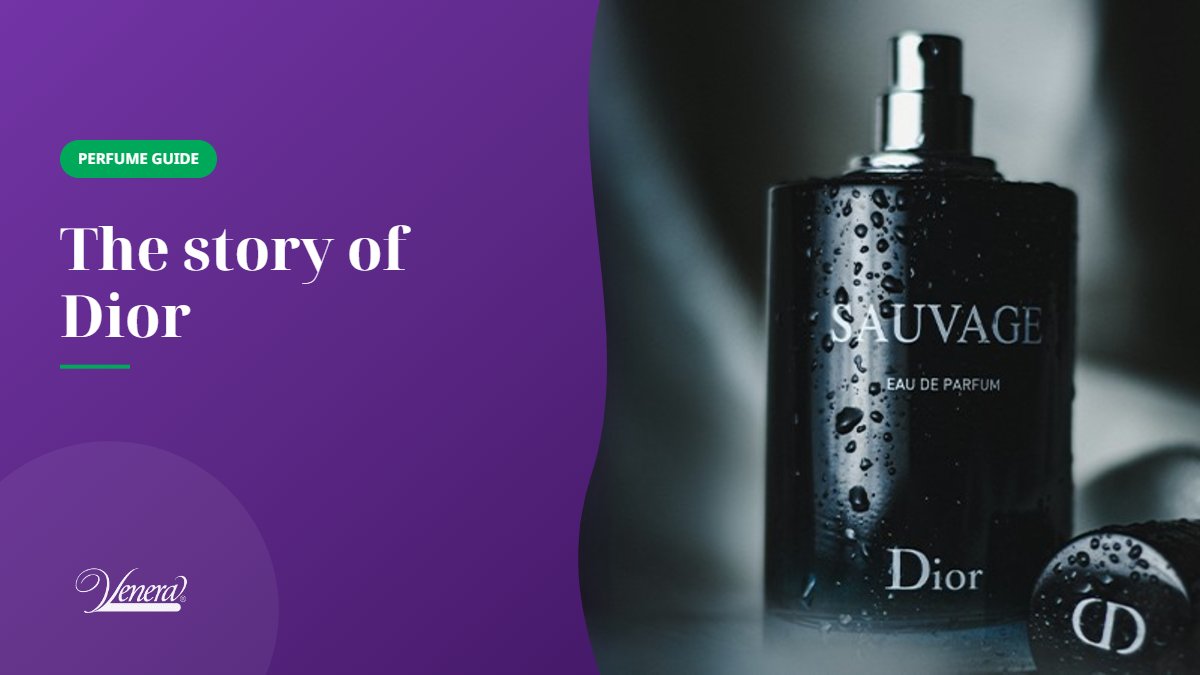
The journey of a fashion empire from the small town of Granville to the world's runways.
Christian Dior: a name synonymous with luxury, elegance and innovation in the world of fashion. His story is an inspiring example of how a unique creative vision can transform an entire industry. The influence of the Dior legend has remained a significant force in the fashion industry for more than 7 decades.
Today we will introduce you to the rich history of the legendary fashion house, from its founding to its modern-day development. We will trace the rise of one of the most influential brands in the world of fashion, its innovations and its lasting influence on style and culture, exploring the key moments, people and collections that shaped the Dior legend.
The beginning
Christian Dior was born on 21 January 1905 in the picturesque town of Granville, on the coast of Normandy, France. He grew up in a wealthy family that gave him a comfortable childhood and the chance to develop his artistic inclinations from an early age. Dior's parents, Maurice Dior and Madeleine Martin, encouraged their son's creativity, even though they had other plans for his future.
Christian's childhood in Granville had a deep influence on his aesthetic and, later, on the designs he created. The beautiful nature of Normandy, the sea breeze and the flower gardens of the family villa "Les Rhumbs" became a source of inspiration for many of his collections. This connection with nature and its forms would become a hallmark of the Dior style over the years.
Despite his family's wish for him to pursue diplomacy, young Christian showed a strong interest in art and fashion. He spent hours drawing and sketching clothes, which foreshadowed his future career in the fashion industry.
Dior's entry into the world of fashion
In the 1920s, following his passion for art, Dior moved to Paris, the city that would become the stage of his triumph in fashion. At first he opened a small art gallery, funded by his father. There he exhibited works by famous artists such as Pablo Picasso, Georges Braque and Jean Cocteau, developing a feel for form and colour that he would later apply in fashion design.
However, the economic crisis of 1929 dealt a heavy blow to the family's finances, forcing Dior to close his gallery. This extremely difficult moment turned out to be a turning point in his life and steered him toward a new career: fashion design.
After closing the gallery, Dior began selling fashion sketches to newspapers and fashion houses. His talent quickly caught the attention of the industry. His detailed, elegant drawings impressed a number of well-known designers.
In 1938 he got the chance to work for the designer Robert Piguet. This proved to be invaluable experience for Dior and allowed him to get to know the production processes of haute couture up close. Working with Piguet helped the rising fashion star to refine his skills and develop his own style.
The founding of the House of Dior
The outbreak of the Second World War temporarily interrupted Dior's career in fashion. He served in the army, but after being demobilised in 1942 he returned to Paris and continued his work in the fashion industry. During this period the designer worked for the fashion house of Lucien Lelong, where he further developed his talent and built valuable industry contacts.
The turning point in Dior's career came when he met the textile magnate Marcel Boussac. Impressed by Dior's talent and vision, Boussac offered him financial backing to create a new fashion house. Thanks to this support, Christian Dior founded his own fashion house in December 1946.
Its creation marked the beginning of a new era in the history of fashion. Dior gathered a team of talented designers, tailors and craftsmen, determined to return Paris to the top of world fashion after the devastating years marked by war and occupation.
The revolutionary "New Look"
On 12 February 1947, Christian Dior presented his first haute couture collection, which caused a real sensation. This collection introduced a new silhouette that emphasised feminine shapes: narrow shoulders, a slim waist and full skirts. The style quickly became known as the "New Look", a name given to it by Carmel Snow, editor of Harper's Bazaar.
The "New Look" was the complete opposite of the austere, practical clothes typical of wartime. The designer used luxurious fabrics and generous amounts of cloth to create romantic, feminine silhouettes reminiscent of the Belle Époque.
The key elements of the "New Look" are:
- an emphasised waist, achieved with corsets and padding;
- full skirts reaching mid-calf, often requiring up to 25 metres of fabric;
- soft, rounded shoulders contrasting with the narrow torso;
- refined details and accessories, including hats, gloves and jewellery.
This style quickly became a symbol of post-war optimism and the revival of luxury fashion. The "New Look" embodied the zest for life and the desire to return to elegance and femininity after the years of hardship and practicality imposed by the war.
Despite some criticism of its extravagance and the "waste" of fabric at a time of post-war restrictions, the "New Look" had a huge influence on the fashion of the 1950s. It not only transformed the silhouette of women but also restored Paris's position as the fashion capital of the world.
Expanding the brand: perfumes and accessories
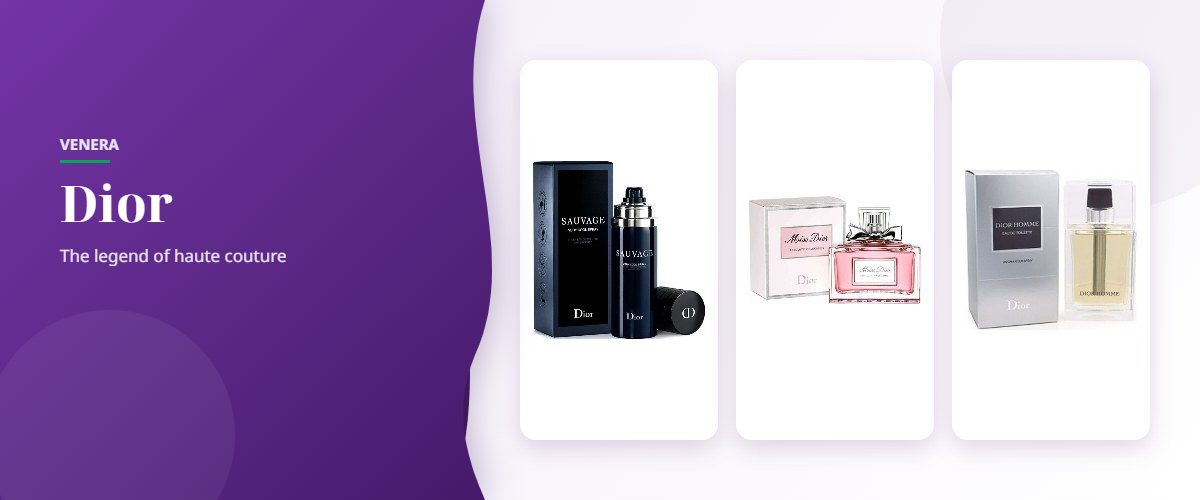
The success of the fashion line inspired Dior to expand his brand, turning it into a veritable empire of luxury. In 1947, just a few months after the presentation of the "New Look", he launched his first perfume, Miss Dior. The fragrance was dedicated to Dior's sister, Catherine, and quickly became a classic in the world of perfumery.
Miss Dior started the brand's successful perfume line, which includes a number of other iconic fragrances such as Diorama (1949), Eau Fraîche (1953) and Diorissimo (1956). Each of these perfumes reflects the elegance and refinement characteristic of the brand.
In the following years Dior continued to expand his range, adding:
- Shoes: In 1953 Dior began a collaboration with the shoe designer Roger Vivier, creating elegant shoes that perfectly complemented the silhouette of the "New Look".
- Jewellery: The designer introduced a line of jewellery that included both elegant and bolder designs, complementing his fashion collections.
- Bags: Iconic models such as the Lady Dior became an inseparable part of the wardrobe of elegant women.
- Cosmetics: The Dior Beauty line was launched in 1955, offering make-up and skincare products inspired by the brand's fashion collections.
This diversification allowed more people to experience the luxury of the Dior brand, even if they could not afford haute couture. This broadening of the range gradually built a complete "Dior universe", in which every aspect of a woman's style could be addressed by the brand.
International expansion
Dior's success quickly extended beyond the borders of France. In the 1950s the company began its international expansion, opening boutiques in key fashion capitals around the world.
- 1948: Opening of a boutique in New York, the first outside Paris. This marked the beginning of Dior's presence in the United States, a key market for luxury goods.
- 1953: Dior opened a boutique in London, consolidating its presence in the European market outside France.
- 1956: Opening of a boutique in Caracas, Venezuela, allowing the brand to gain a foothold in South America.
This international expansion not only increased the popularity and accessibility of the brand but also helped establish Dior as a global leader in luxury fashion. Dior became a symbol of French chic and elegance all over the world, turning its fragrances into some of the most popular among women and men around the world.
Dior's successors
Christian Dior died suddenly in 1957, just ten years after founding his fashion house. His premature death shocked the fashion world and raised the question of the brand's future. The fashion house decided to carry on, appointing 21-year-old Yves Saint Laurent as the new creative director. This bold but risky step secured the brand's future, and each new creative director has marked a new stage in its development.
Yves Saint Laurent (1957-1960):
- Continued Dior's legacy, introducing a younger and more modern style.
- Created the iconic "trapeze" line, which freed the waist.
- His collections, especially the "Beatnik" of 1960, were bold and innovative, but also controversial.
Marc Bohan (1960-1989):
- Returned the brand to a more classic elegance.
- Created the "Slim Look" line, a continuation of the idea of refined femininity.
- Expanded Dior's prêt-à-porter line, making the brand more accessible.
Gianfranco Ferré (1989-1996):
- Introduced an architectural approach to design, inspired by his training as an architect.
- Combined his Italian background with the French elegance of Dior.
John Galliano (1996-2011):
- Brought theatricality and drama to Dior's collections.
- Created some of the most memorable and extravagant shows in the brand's history.
- Extended Dior's influence in pop culture.
Raf Simons (2012-2015):
- Introduced a more minimalist and modern approach to design.
- Focused on renewing Dior's classic silhouettes for the modern woman.
Maria Grazia Chiuri (since 2016):
- The first woman creative director in Dior's history.
- Brings a feminist message to the collections, combining elegance with a political statement.
- Focuses on practicality and comfort without sacrificing the luxury aspect of the brand.
Each of these designers contributed to the evolution of the brand while preserving the spirit and elegance characteristic of Dior. From its founding in 1946 by Christian Dior to today, the House of Dior remains synonymous with French luxury and elegance. Despite the many changes over the decades, the brand has managed to keep its identity and continue to inspire the world of fashion with its timeless designs and impeccable quality. The story of Dior is not just the chronicle of a fashion brand but a reflection of society's changing ideals of beauty and style.
Browse the rich selection of perfumes by Dior in our shop and choose a fragrance that will be remembered!