


From orphanage to global fashion empire.
The incredible story of
Gabrielle "Coco" Chanel
Coco Chanel is a name that resonates across world fashion. Her story shows how talent, persistence and innovation can transform not just one life but an entire industry. This article reveals the inspiring journey of Gabrielle "Coco" Chanel from her difficult childhood to the creation of a fashion empire. We will follow how she revolutionised women's fashion and created a style that still influences us today.

Early years and a difficult start
Gabrielle Bonheur Chanel, known as Coco Chanel, was born on 19 August 1883 in Saumur, France. Her childhood was marked by poverty and hardship. Her mother, Jeanne Devolle, worked as a laundress and died of tuberculosis when Gabrielle was only 12. Her father, Albert Chanel, a street vendor, abandoned her in an orphanage together with her two sisters.
At the Aubazine convent, where she spent six years of her life, Gabrielle learned the craft of sewing from the nuns. This skill proved decisive for her future career. There she developed not only her technical skills but also her eye for simplicity and elegance, inspired by the austere monastic garments.
Coco Chanel's first steps in fashion
After leaving the orphanage at the age of 18, Chanel began working as a seamstress. In her free time she sang in cafés and cabarets, where she got the nickname "Coco". According to some sources, the nickname comes from the songs "Ko Ko Ri Ko" and "Qui qu'a vu Coco", which she often performed.
While staying in Moulins, Chanel met Étienne Balsan, a wealthy cavalry officer. He introduced her to the world of wealthier and more influential people, which proved key to her later success. Through Balsan she met Arthur Capel, an English industrialist, who became her great love and business mentor.
With Capel's financial support, Chanel opened her first hat shop in Paris in 1910, at 21 rue Cambon. Her hats, with their simple yet elegant design, quickly attracted the attention of the Parisian elite. They differed dramatically from the cluttered, heavy styles popular at the time.
A revolution in women's clothing
The success of the hats encouraged Chanel to expand into clothing. In 1913 she opened a boutique in Deauville, a resort town in Normandy, where she presented sportswear for women. These clothes were revolutionary for their time: comfortable, practical and elegant.
Chanel introduced the use of jersey, a soft, stretchy fabric that until then had been used mostly for men's underwear. She created clothing that allowed women to move freely, rejecting restrictive corsets and long skirts.
In 1915, during the First World War, Chanel opened another boutique, this time in Biarritz. The war changed social dynamics and the role of women in society. Many women started working and needed practical yet stylish clothing. Chanel's designs met this need perfectly.
One of her most iconic creations from this period is the little black dress, introduced in 1926. She called it the "Ford" of fashion, hinting at its accessibility and versatility. The dress became a symbol of elegant simplicity and remains relevant today.
Coco Chanel's perfume collection
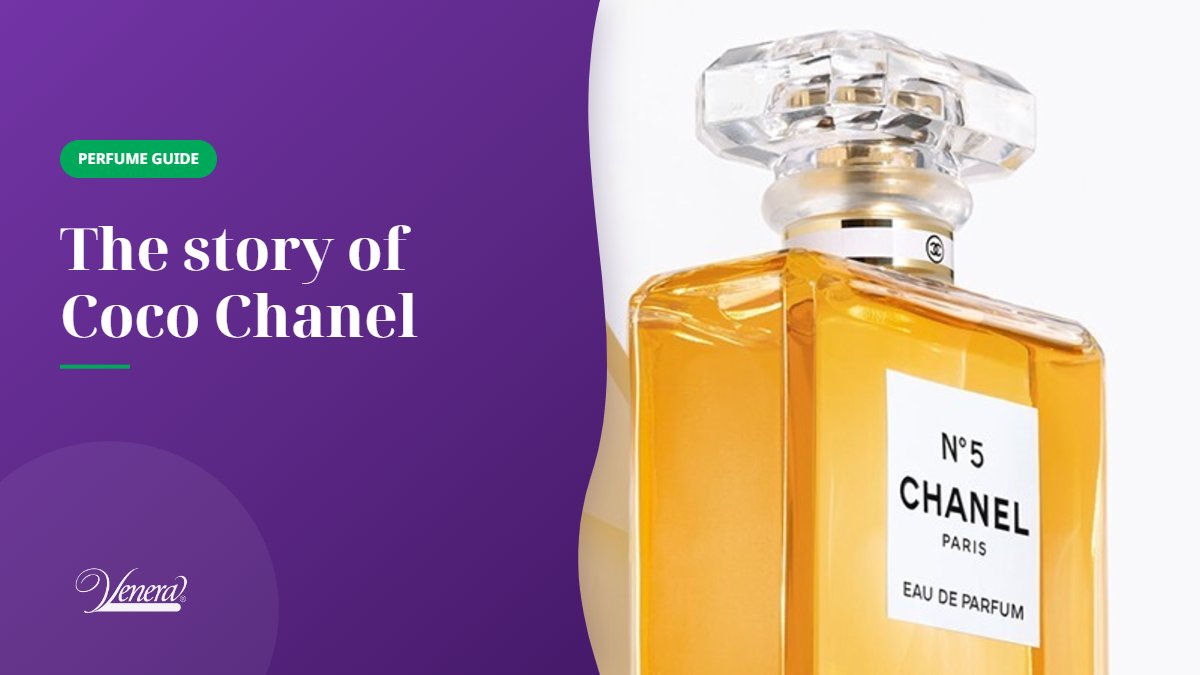
Coco Chanel did not limit herself to clothing. In 1921 she entered the world of perfumery, creating the legendary fragrance Chanel No. 5. It was the first synthetic perfume in the world, combining more than 80 ingredients.
The idea for Chanel No. 5 came from Coco's desire to create a fragrance that embodied the modern woman. She worked with the perfumer Ernest Beaux, who created several samples. Chanel chose the fifth sample, hence the name of the perfume.
Chanel No. 5 became a revolution in the perfume industry. Unlike the single-flower scents that prevailed at the time, it offered a complex, abstract composition. The perfume quickly became a symbol of luxury and sophistication.
After the success of No. 5, Chanel continued to expand her perfume collection. Chanel No. 22 was created in 1921 and Gardénia in 1925. Each of these fragrances reflects a different aspect of Chanel's vision of the modern woman.
An interesting fact is that Chanel chose to present No. 5 first to her most loyal clients, spraying it in the fitting rooms of her boutique. This innovative marketing approach helped create an aura of exclusivity around the fragrance.
The rise of the fashion empire
In the 1920s and 1930s, Chanel continued to expand her fashion empire. She introduced the concept of a complete style, including not only clothing but also accessories, jewellery and perfumes. She created a series of iconic designs that became her trademark. Among them are the tweed jacket, chain belts, pearl necklaces and two-tone shoes. These elements became symbols of elegance and style. In 1931 she was invited to Hollywood to create costumes for film stars. This further increased her popularity and influence worldwide.
Challenges and controversies
Despite her enormous success, Coco Chanel's life was not free of difficulties and controversy. During the Second World War she closed her boutiques, believing that "it was not a time for fashion". This period of her life is linked to controversy over her ties with the Nazi occupiers in France.
After the war she withdrew to Switzerland for several years. Her return to fashion in 1954 was met with scepticism at first, but she soon managed to regain her position as a leading designer.
The legacy of Coco Chanel
Coco Chanel died on 10 January 1971 at the Ritz Hotel in Paris, working on a new collection until her last day. Her legacy, however, lives on. The Chanel brand remains a symbol of luxury and elegance. Designers such as Karl Lagerfeld and Virginie Viard continued to develop Chanel's vision, adapting it to the present while preserving its unique spirit.
Influence on modern fashion
Coco Chanel's influence on modern fashion is undeniable. Her innovations, from the use of jersey to the creation of the little black dress, continue to inspire designers around the world.
The concept of comfortable yet elegant fashion that Chanel introduced remains relevant today. Her philosophy of simplifying clothing and focusing on quality and functionality continues to shape fashion trends.
Why does Chanel remain a leading brand?
Chanel remains one of the leading fashion brands in the world thanks to its ability to balance tradition and innovation. The brand stays true to the principles set by Coco Chanel, while adapting to the changing needs of modern consumers.
The quality of Chanel products remains among the highest today, which justifies their luxury reputation. At the same time, the brand successfully attracts a younger audience through strategic collaborations and innovative marketing.
How to bring Coco Chanel's style into your wardrobe?
Chanel's style is classic and easily adapts to a modern wardrobe. Here are a few ways to include elements of her style:
- Invest in a quality tweed jacket: it never goes out of fashion.
- Wear pearl accessories for an elegant finishing touch to any outfit.
- Choose a little black dress for special occasions.
- Combine black and white for classic chic.
- Add the fragrance Chanel No. 5 for complete luxury.
Chanel is not just a brand: it is a way of life, a philosophy of style and a symbol of women's emancipation. This philosophy continues to resonate with people around the world, making the brand a symbol of elegance, innovation and timeless beauty. Choose Chanel and make your everyday life a little more luxurious, a little more stylish and much more special.
If you would like to learn more about other world-famous designers, as well as curious facts from the world of perfumery, visit our blog here.